Services · 04
Gutters & drainage.
Gutters aren’t roofing. They’re foundation protection that happens to hang off the roof — and on Front Range clay, that’s the more expensive of the two things to get wrong.
Why it matters more here.
Much of the Denver metro sits on expansive clay. When it gets wet it swells, and when it swells against a foundation it moves it. The cheapest thing you can do for a house on this soil is get roof water at least four to six feet away from the footing, every time it rains. That’s the whole job of a gutter system, and it’s why we care about the downspouts more than the gutters.
What we install.
- Seamless aluminum, formed on site from coil, in one run per straight edge. No seams to open up in the freeze-thaw.
- Five-inch K-style on most houses; six-inch on big roof planes, steep pitches and anywhere a cloudburst overshoots a five.
- Hidden hangers every two feet, screwed into the fascia, not spiked. Spikes back out in a few winters.
- Downspouts sized to the roof area feeding them, and extensions or buried drains that put the water where it can’t hurt you.
- Colors to match the trim; the standard ones are on the truck.
Guards — honestly.
Under cottonwoods, pines and any tree that drops something all year, guards are worth it. On an open lot with a clean roof they’re a way to spend money on a problem you don’t have. Kenny will tell you which your house is, and if it’s the second one he’ll say so.
Ice dams.
A ridge of ice at the eaves in February, with water backing up under the shingles behind it, is almost always a heat-loss problem, not a gutter problem: warm attic air melts the snow higher up and it refreezes at the cold edge. Heat cable treats the symptom. Attic insulation and proper intake ventilation treat the cause, and we’ll look at both when we’re up there.
With the roof, or on their own.
If we’re replacing the roof, the gutters usually come off anyway, and it’s the right time to replace tired ones and get the drip edge into them properly. If the roof is fine and the gutters aren’t, we’ll do them on their own — it’s a day, and the same crew.
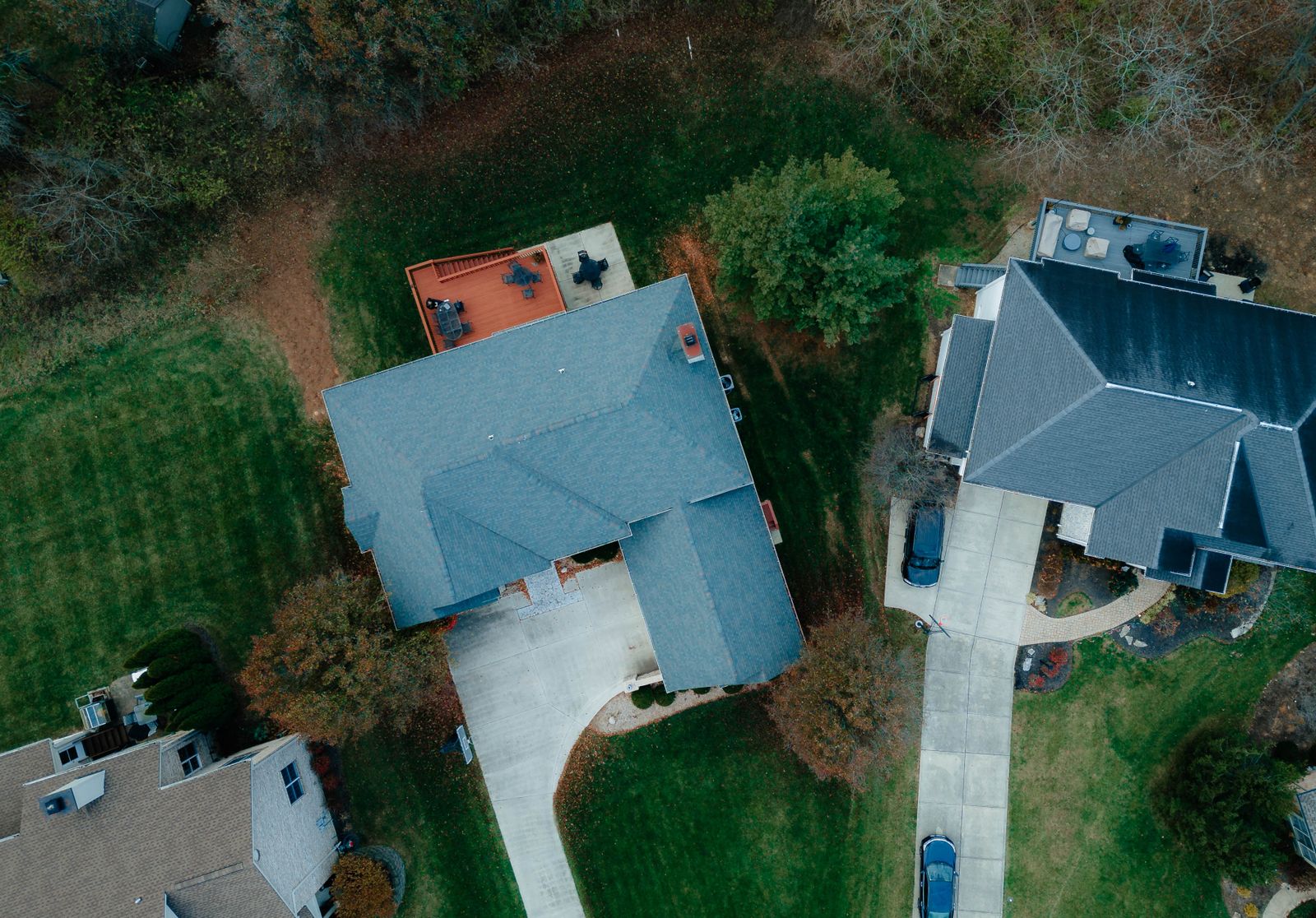
Once. With an umbrella. Watch where each downspout puts its water. If it’s pooling at the foundation, that’s the repair — before the gutters, before the roof, before anything.
Water where it shouldn’t be?
Tell us what you’re seeing — overflow, a pooling corner, ice at the eaves — and we’ll come look at the whole system, not just the gutter.