03 · The install day
One day, start to finish.
What actually happens on a Ridgeline install day. Most single-family roofs; steep, tile or very large roofs take longer, and we’ll say so before we start.
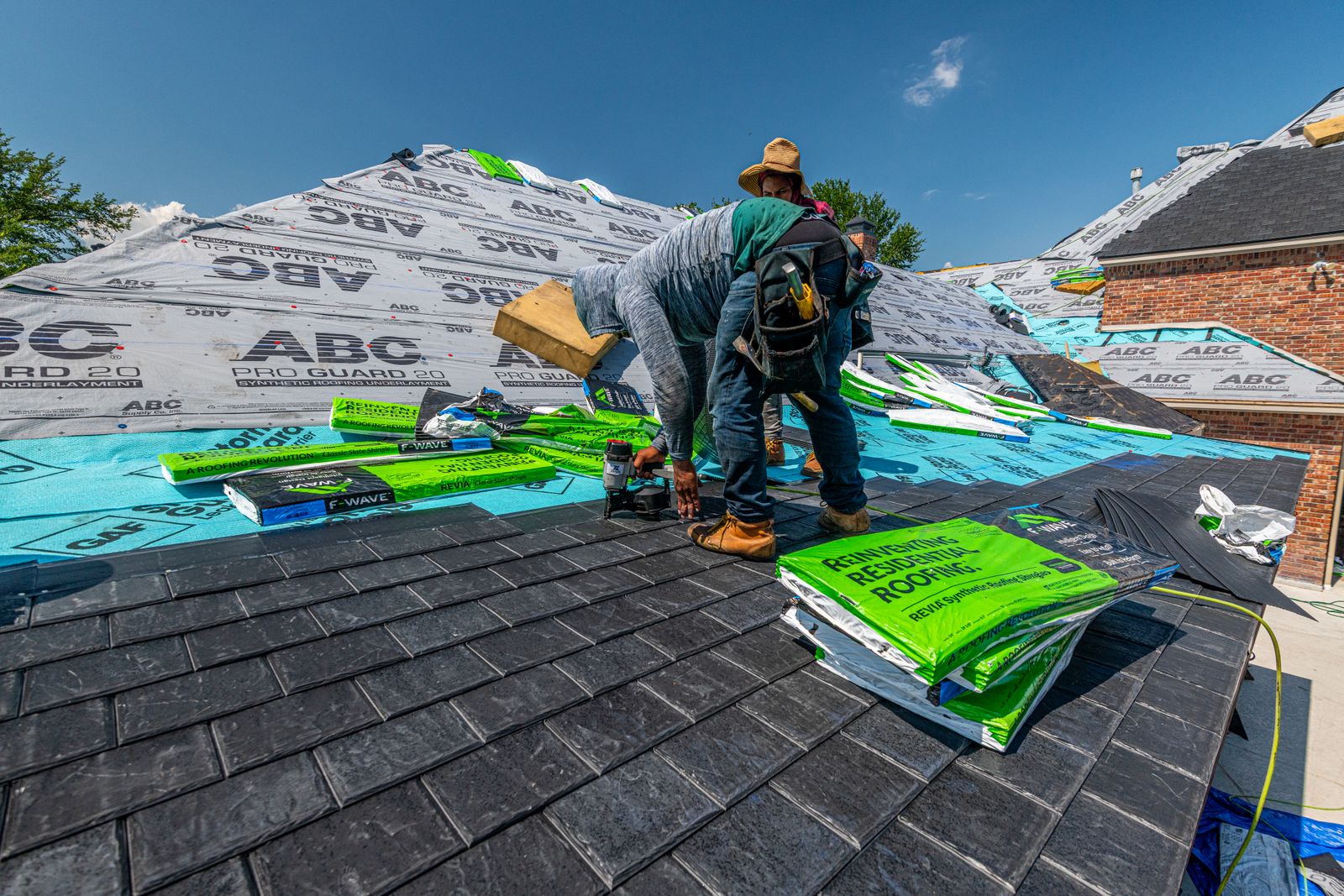
Crew arrives.
Tarps over the beds, plywood over the air-conditioner, magnets out of the truck, the dumpster placed where it won’t crack the driveway. You’ll meet everyone by name before anyone goes up, and Wes checks every harness in the driveway.
Tear-off to bare deck.
Nothing gets nailed over old shingles. Ever. A roof-over hides the deck, voids most manufacturer warranties, adds weight the structure wasn’t built for, and means the next roofer has two layers to remove instead of one. Everything comes off, down to wood.
The deck walk.
Wes walks every sheet with a flashlight. Soft, delaminated or rotten decking is cut out, replaced and photographed — you get the photographs before it’s covered, not a line item after. The per-sheet price was on your estimate, so there’s nothing to negotiate on the roof.
Ice & water, then underlayment.
Self-sealing membrane at the eaves — two courses, past the inside wall line — in every valley and around every penetration. Synthetic underlayment across the rest of the field, capped down, so the deck is dried in before a single shingle goes on.
Edges and flashing.
Drip edge at the eaves and rakes. A starter course, not cut-up field shingles. New step flashing at every wall, new counter flashing at the chimney, cut into the mortar joint. New pipe boots — we don’t reuse the old ones, and we’ll show you the cracked neoprene on the one that came off.
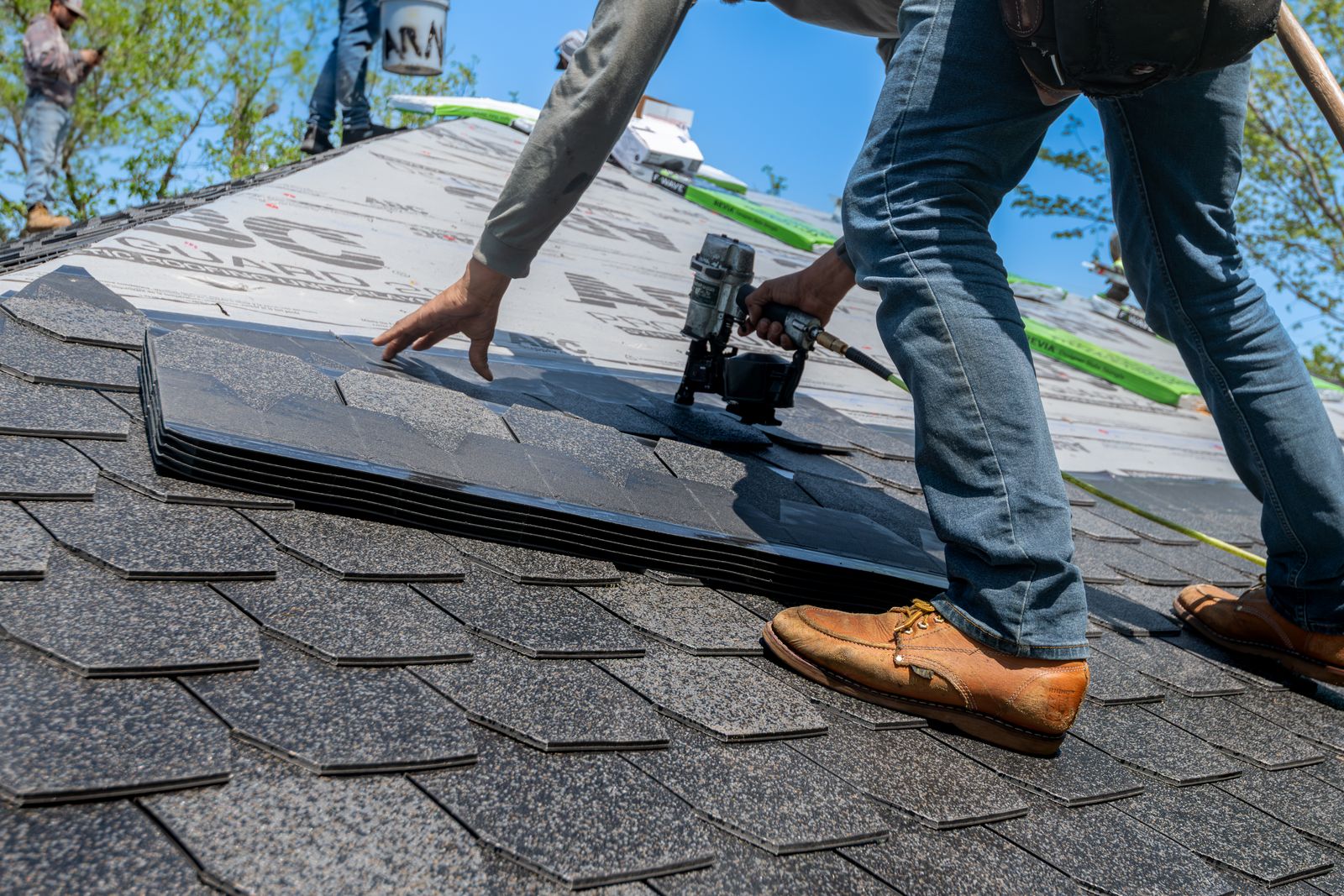
Shingles, six nails each.
Four nails is the manufacturer’s minimum. Six is what the Front Range wind actually asks for, and it’s what the manufacturer’s own high-wind warranty requires. Nails in the line, not high, not low. Ridge vent goes on last, cut to the length the attic’s intake can feed.
The magnet sweep.
Yard, beds, driveway, the street in front — twice. Gutters cleared of granules and cut-offs. Tarps up, plywood off the air-conditioner. The crew doesn’t leave until the foreman has walked it, and he walks it slowly.
Walk-through with you.
Photographs of the deck, the flashing and the finished roof, on your phone before we go. The manufacturer’s warranty registered in your name and the workmanship warranty in your hand before the truck pulls out. If the light’s gone, we come back the next morning and do it properly.

Ten lines. Four of them are the ones cheap bids skip.
Two bids for “the same roof” can be thousands apart. The cheaper one is usually missing the lines marked below. Ask any bidder to point to each one on their estimate.
- Bare deckEvery sheet walked, soft ones replaced and photographed before they’re covered.
- Ice & water shieldTwo courses at the eaves, every valley, every penetration. Denver code requires it at the eaves; a lot of roofs don’t have it.
- Synthetic underlaymentAcross the whole field, capped down. Not felt, which tears in the wind and wrinkles in the sun.
- Drip edgeMetal at the eaves and rakes so water leaves the roof instead of wicking under it. Required by code since 2012; still routinely left off.
- Starter courseA proper starter strip with its sealant at the edge — not field shingles cut in half, which have the sealant in the wrong place.
- Field shingles, six nailsArchitectural or Class 4 impact-rated, six nails in the nail line, hand-checked on the first courses.
- Step & counter flashing, newNew metal at every wall and chimney. Reusing the old flashing is the single most common cause of the leak that shows up in year three.
- Pipe boots, newEvery plumbing vent gets a new boot. The neoprene on the old ones cracks in about a decade of Colorado sun.
- Ridge vent, and the intake to feed itA ridge vent with no soffit intake just pulls conditioned air out of the house. We check both, and we’ll tell you if the attic needs more intake.
- The yard, sweptMagnet sweep twice, gutters cleared, tarps up. Not a layer of the roof — but it’s on the estimate, so it’s on this list.
How long it really takes.
A walkable single-storey roof is a day. A steep, cut-up or two-storey roof is two, and we’ll say so before we start rather than rush the second half. Tile and standing-seam metal take longer again, and big or complicated roofs get their own schedule on the estimate.
The weather rule
We don’t start a tear-off with rain in the afternoon forecast, and we only tear off what we can dry in that day. If a storm comes through anyway — this is Denver — the deck is already under underlayment by mid-morning, and it stays dry. We’d rather move your day than gamble with your ceiling.
What you need to do
- Move the cars out of the driveway the night before — the dumpster and the trucks need it.
- Take pictures and anything fragile off the walls upstairs. Tear-off shakes the house more than people expect.
- Keep pets inside, or somewhere else for the day. The noise is real.
- You don’t need to be home — but be there at 5:30 for the walk-through if you can. It’s the best part.
Want to see a day like this?
Ask for an address where we’re working this week. Drive past at 8:30 and at 5:30. Then call us.